Built Environment
Conventional GUV
Accelerating the adoption of conventional GUV as a scalable, standards-backed air treatment tool for indoor pathogen mitigation.

Understanding What Enables Responsible, Scalable Deployment
Conventional GUV is a well-established air cleaning intervention with a long history of use, but it remains underutilized in many indoor environments. Further work can help clarify the conditions needed to support broader, responsible, and effective deployment.
Historical Significance
Conventional GUV has been used for nearly a century to treat air in occupied indoor spaces, but broader deployment is limited by low awareness, unclear commercial pathways, and gaps in standards and installation capacity.

Many building owners and operators are unaware of how conventional GUV can help reduce exposure to airborne pathogens in indoor spaces.

The market lacks clear, scalable models for evaluating, financing, and deploying conventional GUV installations.

Clear standards and a trained workforce are needed to support safe and effective installation.
How It's Used
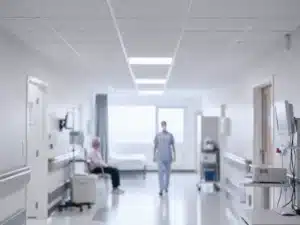
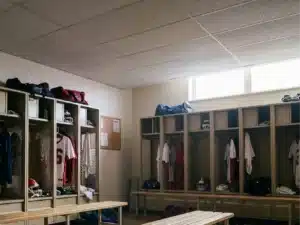
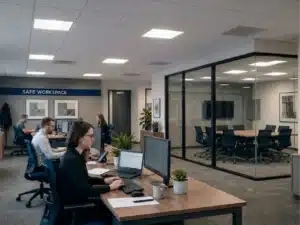
Below is a non-exhaustive list of settings where conventional GUV devices have been installed.

Related Resources

Recent Updates
Explore recent publications, analysis, and updates related to far-UVC research and indoor pathogen mitigation.